
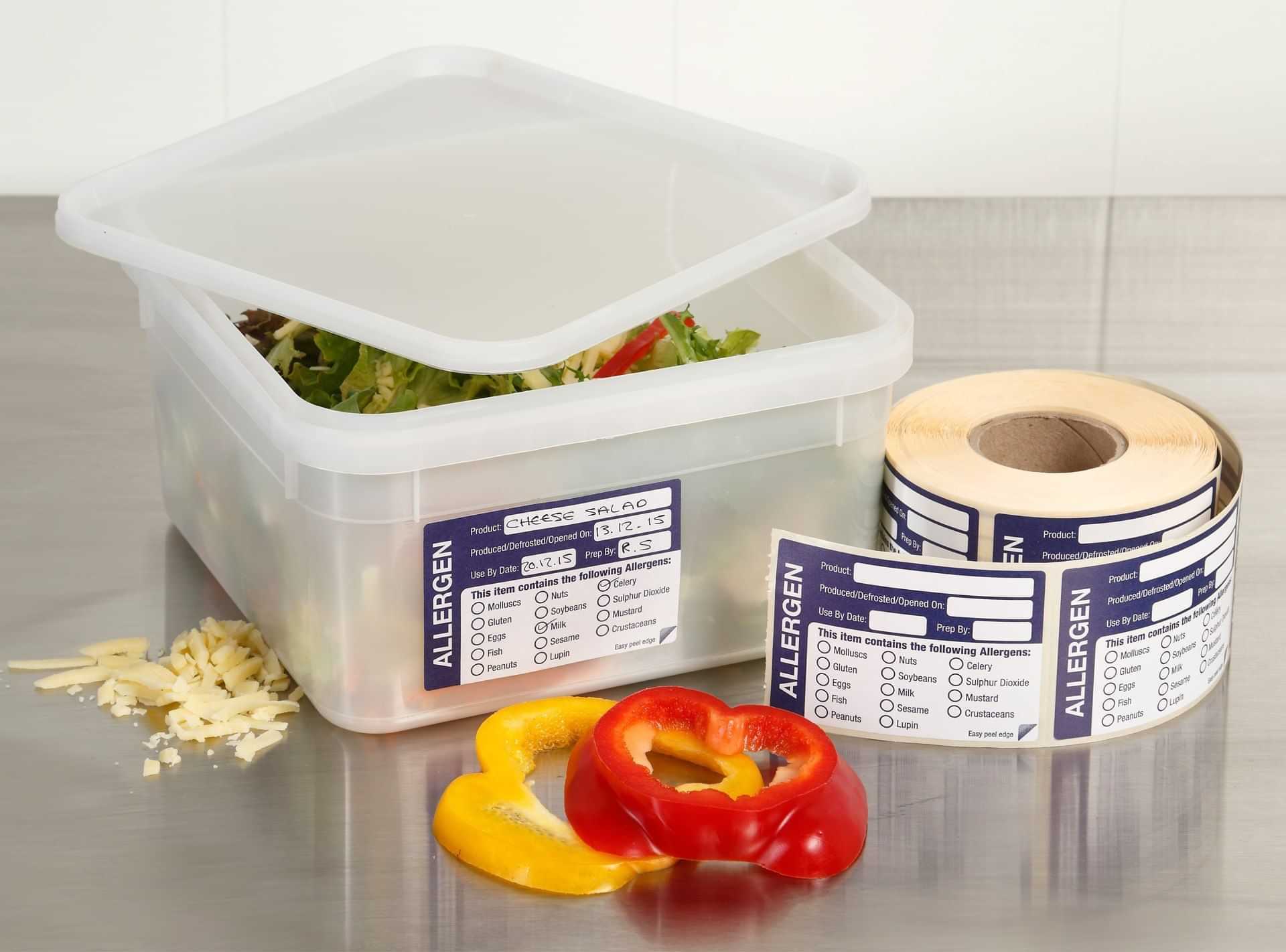
Two containers of sandwich filling are sitting in the fridge. One was prepared yesterday, the other this morning. By lunchtime, the person who made them may have finished their shift. Without a date on either container, how does the next person know which one to use first?
It’s a familiar problem in busy kitchens, particularly where food is prepared in batches or several people share responsibility for stock.
Food safety labels provide a simple way to keep track of preparation dates, identify ingredients and organise stock. But different labels serve different purposes, and choosing the right ones can make everyday food preparation considerably easier.
Different Types of Food Safety Labels and Their Uses
A café making fresh sandwiches each morning won’t necessarily need the same labelling system as a deli preparing several batches of fillings, salads and sauces throughout the day.
The starting point is knowing what each type of label is intended for.
- Day labels: These small, colour coded stickers identify individual days of the week. They’re useful for organising daily food preparation and helping staff recognise when something was prepared. Our day labels come in different colours for each weekday, making them easy to identify at a glance.
- Day prep labels: Where more information is needed, day prep labels provide space for product details, quantities, preparation dates, use by dates and employee names. They’re particularly useful for kitchens preparing food in advance or across several shifts.
- Use by labels: These make important dates more visible on stored food. Available in two sizes, our use by labels can be used to mark incoming stock and help staff identify products approaching their use by dates.
- Use first labels: Sometimes older stock gets pushed behind newer deliveries. A use first label provides a visible reminder to prioritise suitable stock before opening something new, provided it remains safe to use.
The right combination depends on how much food you prepare, how long it can safely be stored and the information your team needs to record.
Preparation Dates and Use By Dates Are Not the Same
A preparation date tells you when something was made. A use by date tells you the last date food can safely be used, provided it has been stored correctly.
Take a deli that prepares a batch of sandwich filling on Monday morning. Recording Monday’s date is useful, but it doesn’t automatically establish how many days the filling can be kept.
The safe storage period depends on the ingredients, preparation methods, storage conditions and the business’s established food safety procedures. For purchased ingredients, the manufacturer’s instructions for use after opening must also be followed.
The Food Safety Authority of Ireland makes an important distinction between use by dates, which relate to food safety, and best before dates, which generally concern quality. Food must not be sold or consumed after its use by date.
An internal kitchen label should reflect the applicable storage limits. Writing a new date on a container does not extend the time food can safely be kept.
Making Stock Rotation Easier
Stock rotation sounds straightforward until you’re dealing with multiple deliveries, prepared ingredients and a fridge that’s constantly being opened during service.
Imagine a deli receives a fresh delivery while several containers from the previous one are still in storage. Without a clear system, staff may reach for the newest stock simply because it’s easier to access.
Having a consistent labelling routine helps prevent this. A few simple habits can make a real difference:
- Check existing stock before preparing more food. Looking through what’s already available can help avoid unnecessary preparation and reduce waste.
- Label food as soon as it’s prepared or opened. Record the relevant information straight away, while it’s fresh and easy to confirm.
- Keep earlier dates visible. Arrange containers so staff can identify ingredients that need to be used first, always following their safe storage limits.
- Include date checks in daily routines. A quick review before service or during a shift change can help identify food approaching its use by date and anything that needs to be discarded.
These habits are particularly useful where several people handle the same ingredients throughout the day. Someone starting an afternoon shift can see what’s available and which items need attention without having to track down the person who prepared them.
Common Food Labelling Mistakes to Watch For
Even kitchens that regularly use food labels can run into problems when the information isn’t clear.
One example is relying entirely on coloured weekday stickers. A Monday label is useful for quick identification, but it doesn’t tell staff which Monday the food was prepared. Where necessary, the full date should be recorded.
Reusing containers without removing old labels can cause confusion too. If two different dates are visible, staff shouldn’t have to work out which one applies.
Incomplete information is another issue. Two containers might have the same preparation date but contain different ingredients. Without a product name, somebody unfamiliar with the contents may have difficulty identifying them correctly.
Labels also need to remain readable throughout storage. Information that’s smudged, covered or difficult to make out isn’t much help during a busy service.
And while a use first sticker can help reduce waste, it should never be used to justify keeping food beyond its safe storage period.
These details are easy to overlook, but getting them right helps keep the system useful for everyone working in the kitchen.
Choosing the Right Labels for Your Kitchen
For a small coffee shop preparing sandwiches and pastries each morning, simple day labels may be enough for some of its daily stock organisation. A deli making fillings, sauces and salads in larger batches may benefit from preparation labels that record additional information.
Restaurants and catering kitchens often have more ingredients moving between preparation, storage and service, making a combination of day prep, use by and use first labels particularly useful.
It also helps to consider the containers your team uses, how much space is available for writing and whether labels need to be removed when containers are washed and reused.
At Café Brands, we supply a wide range of food safety labels for cafés, delis, restaurants and catering businesses, from individual day label rolls to preparation labels and stock rotation stickers.
If you’re reviewing how your kitchen manages food preparation and storage, get in touch and we’ll help you find the right labels for your business.